

Beard Maintenance Guide for Men
A beard can sharpen your whole appearance - or make you look less put together than you actually are. The difference usually comes down to routine. This beard maintenance guide for men is built for real life: keeping your beard clean, shaped, comfortable, and consistent without turning grooming into a second job.
Good beard care is not about using the most products or chasing a trend. It is about control. Your beard should suit your face, work with your haircut, and hold its shape between barber visits. When that happens, you look more polished with less effort.
What a good beard routine actually does
A proper beard routine helps with more than appearance. It keeps the skin underneath healthier, reduces itch, limits flaking, and makes the beard easier to shape each morning. It also helps your beard grow in a way that looks intentional rather than uneven or overgrown.
That matters because every beard has a different pattern. Some grow thick through the jaw but lighter on the cheeks. Some fill out well but get wiry. Others look strong at a short length and lose shape when they get longer. Maintenance is what brings your growth pattern under control instead of fighting it.
Beard maintenance guide for men: start with your length
The best routine depends on beard length. A short beard needs frequent edge control. A medium beard needs more brushing and conditioning. A longer beard needs structure, hydration, and regular reshaping so it does not widen too much through the sides.
If your beard is stubble to short boxed length, your biggest job is keeping lines clean and the neckline disciplined. At this stage, even a few days of neglect can make the beard look soft around the edges.
If your beard is medium length, you need to pay more attention to balance. Bulk can build under the jaw or at the corners of the face. Daily grooming matters more here because the beard starts to hold volume.
If your beard is fuller or longer, maintenance becomes less about trimming everything down and more about directing growth. You are shaping a silhouette. That means brushing, drying properly, and removing weight only where it improves the overall line.
Washing: less often, better technique
One of the most common mistakes is overwashing. Beard hair is coarser than scalp hair and the skin underneath can dry out quickly. Washing too often with harsh shampoo strips natural oils and leaves the beard brittle.
For most men, washing the beard a few times a week is enough, especially if you are using a beard-specific cleanser or a gentle face-safe wash. If you work out daily, commute through the city, or use styling product, you may need to rinse more often, but that does not always mean a full wash every day.
Water temperature matters too. Hot water feels good, but it can dry the skin and rough up the hair cuticle. Lukewarm water is the better call. Massage the cleanser down to the skin, not just over the surface of the beard, then rinse thoroughly.
Beard oil, balm, or nothing at all?
Most men do not need a crowded shelf of products, but they do need the right one for their beard type. Beard oil works best when the beard is short to medium and the main goal is softer hair and better skin comfort. A few drops worked into a slightly damp beard can reduce dryness and make the beard easier to manage.
Balm is more useful when the beard needs light hold. If your beard sticks out at the sides or loses shape by midday, balm can help keep things tighter. It also adds a bit of weight, which helps medium beards look cleaner.
If your beard is very short, you may not need much product at all. A clean wash routine and occasional oil can be enough. If your beard is long, oil alone might not control shape, so a balm or cream often makes more sense. It depends on texture, density, and the look you want.
Trimming without damaging the shape
At-home trimming is where many beards go off course. The issue is not effort. It is usually taking too much off too fast, especially when trimming a wet beard. Hair contracts as it dries, so what looks even when wet can end up shorter and less balanced than expected.
Always trim the beard dry and in its natural state. Brush it first so you can see the true outline. Then make small adjustments instead of broad cuts. Focus on obvious bulk, stray hairs, and uneven corners before touching the main shape.
Cheek lines should look clean but not overly carved. A beard usually looks stronger when the line follows your natural growth pattern rather than sitting too low. Necklines matter even more. Too high, and the beard can look thin from the side. Too low, and it starts to lose structure. A good rule is to keep the neckline clean enough to separate the beard from the neck while still leaving enough weight under the jaw.
The neckline changes everything
A strong neckline can make an average beard look far more deliberate. This is especially true for short beards and men with fuller growth under the chin. When the neckline is ignored, the beard often loses definition first from the profile view.
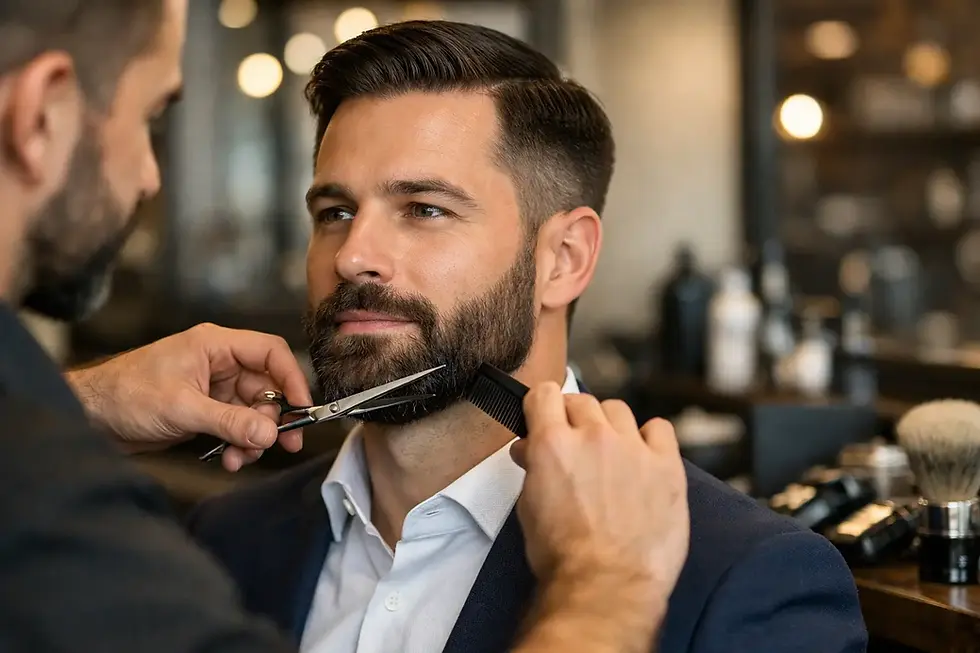
The right line usually sits above the deepest part of the neck and below the jaw, shaped to support your face rather than cut into it. There is no perfect universal measurement because neck length, jaw structure, and beard density all change the result. That is where a professional beard service makes a visible difference. Once the base shape is set properly, home maintenance gets much easier.
How your haircut affects your beard
A beard does not sit on its own. It works as part of your overall shape, and the haircut around it matters. A tighter fade can make the beard feel stronger and cleaner, but if the transition is too sharp, the look can become disconnected. A more natural blend from sideburn into beard often suits classic cuts and fuller facial hair.
Face shape matters here too. If you have a narrower face, too much width through the cheeks can throw off proportion. If your face is rounder, keeping the sides tighter and leaving more length through the chin can create a more structured look. The goal is not making every beard look the same. The goal is making your beard work with your features.
Common beard problems and what usually fixes them
Patchiness is often more noticeable because of poor shaping than poor growth. Keeping a beard shorter and cleaner can make lighter areas blend better. Trying to force extra length too early often has the opposite effect.
Itch usually points to dry skin, overwashing, or not cleansing the skin beneath the beard properly. Flaking can come from the same issues. Ingrown hairs are more common around the neckline and cheek cleanup area, especially when shaving against the grain too aggressively.
Beard puffiness usually needs technique, not more product. A brush, a proper trim, and a little controlled hold can do more than heavy oil. If the beard feels wiry, hydration helps, but so does reducing heat and friction from rough towel drying.
When to see a barber
Home care keeps a beard looking respectable. Professional shaping keeps it looking sharp. If your lines never look even, your neckline keeps creeping up, or your beard feels wider every week, it is time for a reset.
A skilled barber can read density, growth direction, and facial structure in a way a mirror at home often cannot. That matters most when you are changing length, growing a beard for the first time, or trying to make a beard work with a specific haircut. At Pintor Barber, beard work is treated the way it should be - as part of a complete grooming standard, not an afterthought.
A simple weekly beard maintenance guide for men
Keep the routine straightforward. Wash the beard a few times a week with a gentle cleanser. Use beard oil or balm based on your length and texture. Brush daily to train the shape. Clean up only the obvious strays between appointments, and avoid major reshaping unless you are confident in what you are doing.
Then pay attention to what your beard is telling you. If it feels dry, adjust your washing and hydration. If it looks bulky, the shape likely needs refinement rather than more product. If it never quite sits right, your current length may not be the best one for your face.
A well-kept beard does not need to look overworked. It should look clean, intentional, and easy on you. That is usually the standard worth aiming for.


Comments