
Can Barbers Cut Long Hair? What to Look For
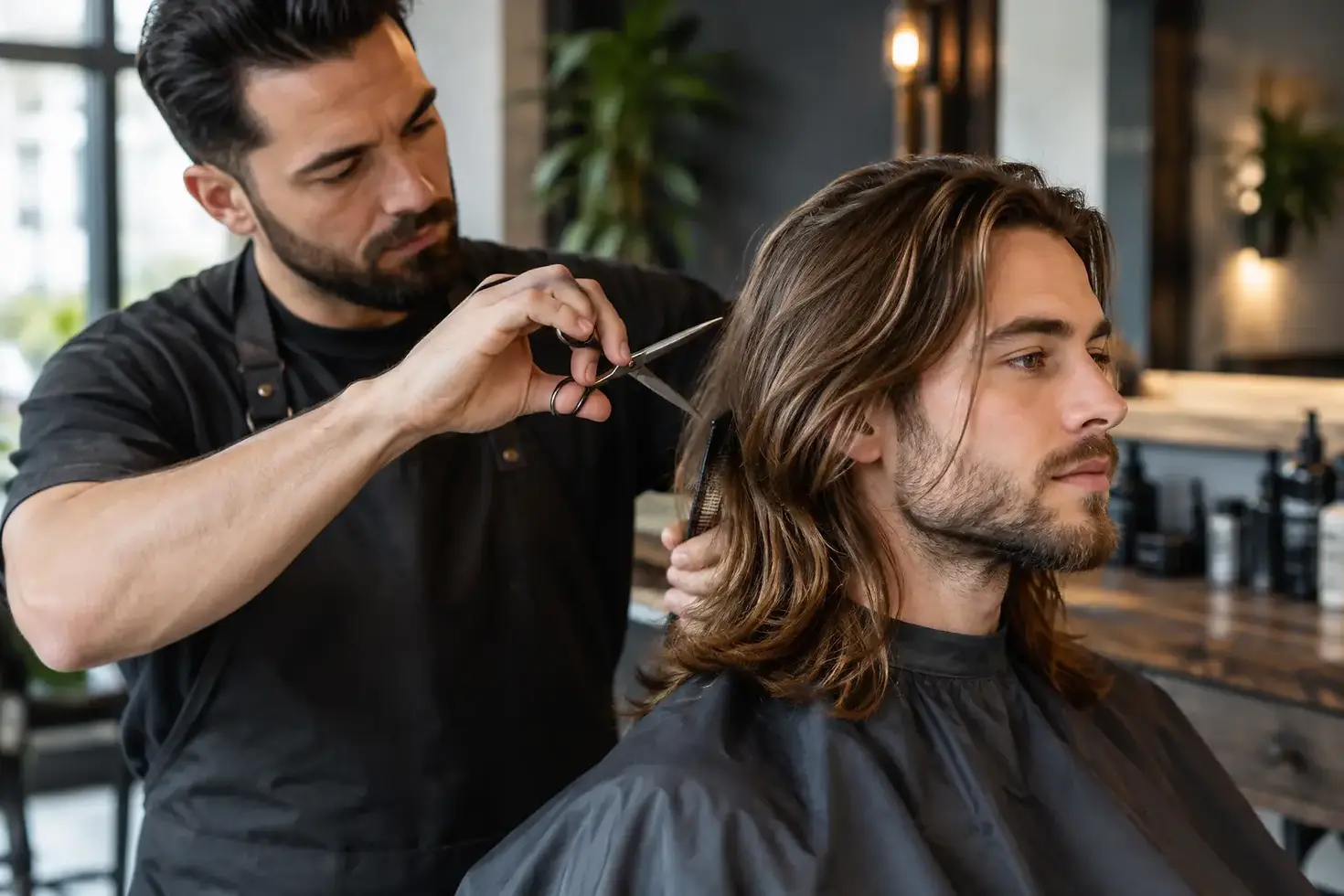
Long hair does not need a different standard of care. It needs a clear plan, controlled technique, and someone who understands how the finished shape will sit after you leave the chair. So, can barbers cut long hair? Absolutely - provided the barber has the experience, time, and approach to work with your length, texture, and intended style.
For men who wear their hair past the ears, to the shoulders, or longer, a haircut is rarely just about taking off inches. The goal may be to clean up the ends, build shape around the face, reduce unwanted bulk, improve movement, or make a growing-out phase look deliberate. A good barber starts by identifying that goal before picking up the shears.
Can Barbers Cut Long Hair Well?
Barbers are trained to cut, shape, and style hair. While barbering is often associated with fades, tapers, short back and sides, and beard work, many professional barbers are also highly capable with longer men’s styles. The deciding factor is not the sign above the door. It is whether your barber understands longer hair and listens carefully to what you want.
Long hair asks for a different kind of precision than a close fade. With short hair, a small adjustment can be corrected quickly. With longer hair, every section affects the overall balance, weight, and movement. Taking too much from the crown can make hair stand up. Removing weight in the wrong place can make thick hair look uneven or leave fine hair looking thin at the ends.
A skilled barber will work with the natural direction of your growth, the density of your hair, your face shape, and the way you normally wear it. They should also account for whether you tuck it behind your ears, part it in the middle, wear it pushed back, tie it up, or let it fall naturally.
When a Barber Is the Right Choice for Long Hair
A barber can be an excellent fit when you want a refined, wearable men’s haircut rather than a dramatic transformation. This includes maintaining medium-to-long length, shaping a classic side part, cleaning up a grown-out textured style, adding a subtle taper around the neckline and ears, or blending longer hair into a beard.
This is where a barbershop approach can be especially valuable. The full picture matters. Longer hair should work with your sideburns, beard line, neck clean-up, and everyday styling habits. A sharp perimeter and properly blended facial hair can make long hair look intentional instead of neglected.
Men with thick, straight, wavy, or lightly curly hair often benefit from carefully managed weight removal and clean internal shaping. The right cut helps the hair move without becoming too wide or heavy. For finer hair, the focus may be on retaining density and avoiding excessive layers that make the length appear sparse.
There are situations where you may want a specialist whose work is focused on a particular technique. If you are seeking a major length change, highly detailed layers, a colour service, chemical treatment, or a specific curl-cutting method, ask directly whether your barber offers that work regularly. A professional who is confident in their craft will give you an honest answer and help you choose the right service for the result you have in mind.
The Consultation Matters More With Length
The best long-hair appointments begin before any hair is removed. Bring a few reference photos if you have them, but use them as a starting point rather than a strict template. Your hair type, density, hairline, and daily routine will determine whether a style translates well.
Be ready to explain what is not working. Perhaps your hair feels too bulky around the sides, flips out at the back, lacks shape when air-dried, or falls into your face at work. Those details are more useful than simply asking for a trim.
A strong consultation should cover a few practical points: how much length you are comfortable losing, where you want to keep weight, how often you style your hair, and whether you wear it up. If you regularly tie it back, say so. The barber needs to see how tension, parting, and shorter face-framing pieces affect that style.
It also helps to be specific about the language you use. “Just clean it up” can mean half an inch to one person and several inches to another. Point to the length you want to retain, discuss the outline you prefer, and ask the barber to confirm the plan. Good communication protects the length you have worked to grow.
Dry, Damp, or Both?
Long hair is often assessed dry because that is when its natural fall, wave pattern, and volume are easiest to see. It may then be cut damp for control and finished dry to refine the shape. There is no single correct method for every head of hair. What matters is that the barber checks the result in the state you are most likely to wear it.
Curly and wavy hair deserve extra attention because they can shrink significantly as they dry. If your texture changes from loose waves when wet to defined curls when dry, mention it early. This helps prevent the common mistake of cutting more length than the finished look can afford.
What a Good Long-Hair Cut Should Deliver
A successful long haircut should still look good after you wash it yourself. That sounds obvious, but it is the real test. It should sit naturally, grow out well, and require a level of styling that fits your life.
The shape should also feel balanced from every angle. The front may look strong in the mirror, while the profile or back can reveal excess bulk, uneven ends, or a disconnected neckline. A barber who checks the full head and invites you to do the same is working with the right level of care.
For many men, maintenance is less about frequent dramatic cuts and more about regular shape control. Split ends, heavy weight at the sides, and an overgrown neckline can make healthy long hair look tired. A light maintenance appointment at the right interval keeps the style looking considered while protecting your overall length.
Styling Long Hair Between Appointments
The right product depends on your hair, not just the style you want. Fine hair may need a lightweight cream or texture product that does not flatten it. Thicker hair often benefits from a cream with more control, while wavy or curly hair may need moisture and definition rather than a heavy hold product.
Use less product than you think at first. Work it through damp or dry hair as directed, then add only if needed. Too much product is one of the quickest ways to make longer hair look weighed down or overly styled.
Your tools matter as well. A wide-tooth comb is useful for detangling wet hair with less pulling. A quality brush can help distribute natural oils through straighter lengths. If you blow-dry, use moderate heat and direct the airflow in the direction you want the hair to sit. The objective is controlled shape, not a stiff finish.
Keep the Neckline Intentional
One reason long hair can lose its edge is an unattended neckline. You do not need a hard, high line that fights the length, but a soft, clean finish around the neck and ears makes a major difference. This is particularly effective for men who wear their hair down, because it gives the overall look structure without sacrificing the relaxed feel of longer hair.
At Pintor Barber in Kitsilano, the standard is simple: your haircut should suit your hair, your face, and the way you actually live. Whether you keep your hair long, wear a clean fade, or move between the two, choose a barber who takes the time to understand the finish you want. Long hair looks its best when it is maintained with the same purpose as every other part of your grooming.


Comments