

Choosing the Right Skin Fade Height for You
A skin fade can make an ordinary haircut look deliberate from every angle. The sides are taken down to the skin at their shortest point, then blended into longer hair above. Done well, it gives the head a cleaner shape, sharpens the profile, and puts more focus on the style through the top.
That clean finish is also why the details matter. Fade height, head shape, hair density, growth patterns, and how often you want to return to the barber all affect whether a skin fade feels right for you. It is not one haircut. It is a technique that can be tailored from subtle and professional to bold and high contrast.
What defines a skin fade?
A skin fade, sometimes called a bald fade, starts with the hair taken extremely short at the base of the sides and back. The barber then moves through carefully selected lengths to remove any visible lines and connect that skin-close area to the hair above.
The result should look gradual, not striped. You should not be able to point to where one guard length ends and another begins. Instead, the blend should support the overall haircut, whether you wear a crop, side part, textured quiff, slick back, curls, or a longer style on top.
The distinction between a skin fade and a very short taper comes down to contrast. A taper generally keeps more length around the sideburns and neckline, creating a quieter transition. A skin fade exposes more skin and creates a stronger, cleaner break between the shortest area and the top. Neither is automatically better. The right choice depends on the look you want and the maintenance you are comfortable with.
Low, mid, or high: the decision that changes the cut
Fade height is the biggest visual decision. It determines where the shortest area sits and how much of the sides are removed.
Low skin fade
A low skin fade stays close to the ears and neckline. It keeps more weight around the upper sides, which makes it a strong option for clients who want a clean finish without making the fade the centrepiece of the haircut.
This version works especially well with classic business cuts, side parts, and medium-length textured styles. It can also suit men with rounder head shapes because it preserves a little more structure at the temples. The trade-off is that it offers less dramatic contrast than a higher fade.
Mid skin fade
A mid skin fade rises to roughly the middle of the sides. It balances clean exposure around the lower head with enough blending space to connect naturally into most styles on top.
For many clients, this is the most versatile starting point. It adds definition without feeling severe, and it works with straight, wavy, thick, or dense hair. A mid fade can look polished for the office and still feel sharp on the weekend, provided the top is shaped for the way you actually wear it.
High skin fade
A high skin fade removes more hair from the sides and creates the strongest contrast. It can make the top look fuller and more pronounced, which is why it pairs well with short crops, textured tops, pompadours, and defined curls.
It is a confident look, but it is not universal. High fades can expose irregularities in head shape, make fine hair on top appear more isolated, or feel too aggressive for someone who prefers a quieter profile. A skilled barber will assess where the fade should rise rather than simply placing it high because that is the current preference.
Your hair and face shape matter more than the reference photo
A reference photo is useful, but it cannot account for your hairline, crown, density, or daily styling habits. Two people can request the same skin fade and leave with different-looking cuts because their hair grows differently.
Thick, straight hair often shows a fade clearly and holds crisp lines well. Dense curls can create a softer, more textured transition that still looks exceptionally clean when the blend is controlled. Fine hair may need a more measured approach, with enough weight left above the fade to avoid making the top look sparse.
Cowlicks and crown growth are equally important. If your hair pushes forward, upward, or sideways in a particular area, the top needs to be cut with that movement in mind. Fighting natural growth may look good for an hour after the appointment, then become difficult to style at home.
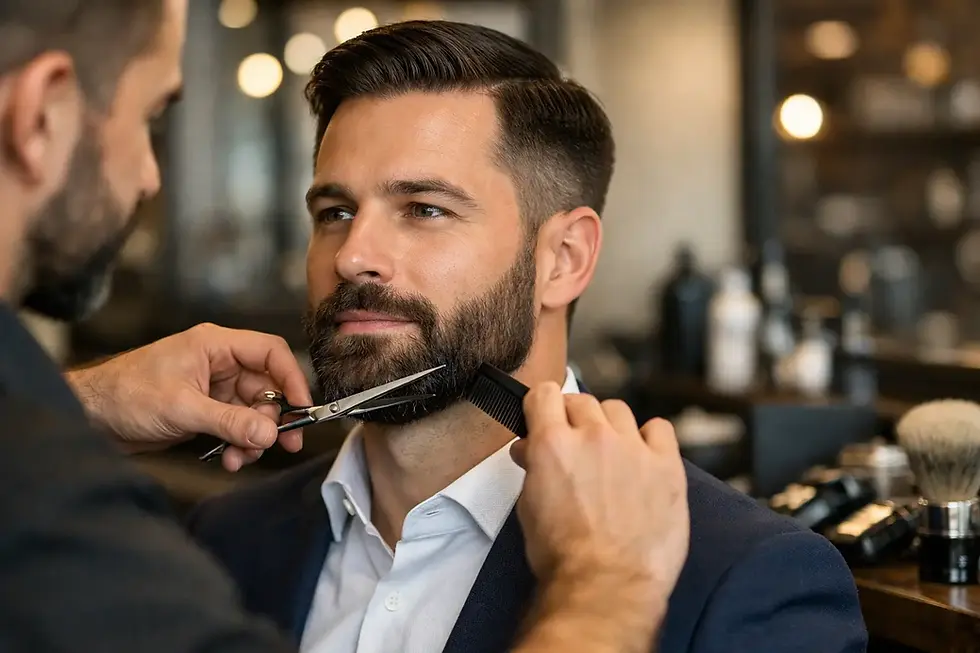
Face shape also guides the decision. More height and volume on top can lengthen a rounder face, while a lower fade with controlled width can help balance a longer face. A strong beard can change the equation as well. The connection between the fade, sideburn, and beard should be planned as one profile, not treated as separate services.
The blend is where quality shows
A skin fade is easy to describe and difficult to execute consistently. The shortest section must be clean without irritation, the transition must be smooth in different lighting, and the shape has to work from the front, side, and back.
Good blending is not about taking everything as short as possible. It is about controlling contrast. Leaving the right amount of shadow can make the fade look fuller and more natural, while removing too much weight too quickly can create dark lines, pale patches, or a disconnected appearance.
This is also where a proper consultation earns its place. Tell your barber how often you usually get cut, whether you wear a hat for work, how much time you spend styling, and what has not worked in previous haircuts. Details such as a sensitive scalp, a receding temple area, or a beard you are growing out affect the approach.
At Pintor Barber, the goal is not to force every client into the same fade. The right cut should look sharp when you leave the chair and continue to sit well as it grows in.
How often does a skin fade need maintenance?
A skin fade looks its crispest in the first week. Because the base is taken down so close, even a small amount of growth softens the contrast around the ears, neckline, and sideburns.
Most clients who want a consistently fresh finish book every two to three weeks. If you are happy with a more lived-in look, three to four weeks can work, particularly with a low skin fade or a longer textured top. Waiting longer is possible, but the original shape may need more reshaping rather than a simple cleanup.
Your routine should match your haircut, not become a burden. A client with a demanding work schedule may prefer a low fade that grows out quietly. Someone who values a highly defined look may find frequent maintenance worth it. There is no wrong answer, as long as the choice is intentional.
Styling a skin fade at home
The fade itself requires little daily work. The focus is the hair on top. Use a product that suits the finish you want: a light cream for natural movement, a matte clay for texture and hold, or a pomade for a more controlled, classic shape.
Start with a small amount. Warm it between your hands, apply it evenly, then build only where you need more control. Heavy product can flatten fine hair, weigh down loose curls, and make a fresh cut feel less clean by the end of the day.
A quick blow-dry can make a noticeable difference for styles with volume or direction. Aim the hair where you want it to sit before applying product. If you prefer a wash-and-go routine, say so during your appointment. The top can be cut to support natural texture rather than requiring a daily styling session.
Is a skin fade right for you?
A skin fade suits men who want a clean, precise outline and are comfortable with the fact that close-cut sides show growth sooner. It can be refined, understated, bold, or modern depending on the height, top length, and finishing details.
The best starting point is usually not the most extreme version. If you are trying one for the first time, a low or mid skin fade gives you a clean introduction while leaving room to adjust higher at your next appointment. Bring a photo if you have one, but be open to a recommendation based on your own hair and routine. A well-chosen fade should make getting ready easier, not give you another thing to manage.


Comments