

How to Pick Haircut Length for Men
A lot of men ask for a short back and sides, then realize too late that “short” means something different to every barber and every client. That is usually where the confusion starts. If you are trying to figure out how to pick haircut length, the right answer is not just shorter or longer. It is the length that works with your face shape, hair type, daily routine, and how polished you want to look between appointments.
A good haircut should hold its shape, suit your features, and feel easy to manage on a normal weekday. It should work in the office, out for dinner, at the gym, and on a rainy Vancouver morning when your hair is doing its own thing. That is why haircut length is less about trend and more about fit.
How to pick haircut length without guessing
The easiest mistake is choosing length based on a photo alone. A style can look clean on someone else and feel off on you if your hair density, growth pattern, or head shape is different. The better approach is to think about haircut length in four parts: the sides, the back, the top, and the hairline around the edges.
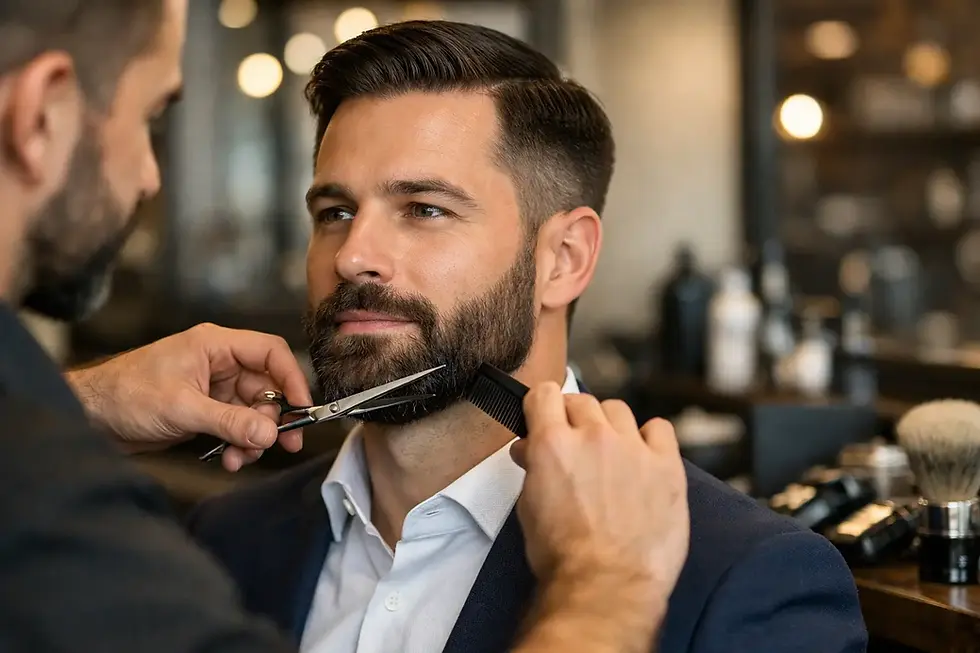
Short sides create a cleaner, sharper finish and put more attention on the face. They usually feel more structured and professional, especially when paired with a fade or tight taper. The trade-off is maintenance. The cleaner the sides, the faster the haircut starts to look grown out.
More length on the sides gives a softer and more natural shape. That can be a strong choice if your face is narrow, your hair has movement, or you want a style that grows out with less contrast. The downside is that bulk builds faster, especially around the temples and above the ears.
On top, short length feels crisp and easy, but it leaves less room to style around cowlicks, uneven density, or changing preferences. Medium length gives you versatility. You can wear it neat, textured, or slightly relaxed. Longer top length can look excellent, but only if you are prepared to style it and keep the shape balanced.
Start with your face shape
Your face shape should guide haircut length more than most men realize. The goal is not to follow a rulebook. It is to create balance.
If your face is rounder, keeping too much width on the sides can make it look wider. In that case, shorter sides with some height or texture on top usually create a stronger profile. If your face is long or narrow, going very tight on the sides with too much height on top can stretch it further. More moderate sides and controlled volume often work better.
Square face shapes tend to handle a wide range of lengths well because the structure is already strong. You can go tighter and cleaner or leave more length for a softer finish. If your face is more oval, you have flexibility, but balance still matters. Too much top length with very tight sides can throw off proportions quickly.
This is one reason a professional consultation matters. Good barbers are not just cutting hair. They are adjusting proportion.
Hair type changes the answer
If you want to know how to pick haircut length properly, look at your hair before you look at style photos. Hair type decides what length will actually behave the way you want.
Straight hair often looks cleaner at structured lengths, but it can also stick out if the sides are cut too short without enough blending. Fine straight hair may need a little more length on top to avoid looking flat. Thick straight hair may need weight removed so the shape does not become too heavy.
Wavy hair usually benefits from enough length to let the pattern work for you instead of against you. Cut it too short in the wrong areas and it can push out or sit unevenly. Leave the right amount of length and it gains natural movement with less effort.
Curly hair needs even more intention. Length affects shrinkage, shape, and control. What looks like a medium length cut when wet can sit much shorter when dry. Going too short can make curls harder to shape. Leaving more length can look excellent, but the silhouette has to stay clean.
Coarse or dense hair often needs internal weight management, not just shorter length. Thinning everything down is not always the answer. Sometimes a barber needs to leave enough length for the hair to lie better while refining where the weight sits.
Match the cut to your routine
The right haircut length should suit your schedule, not just your style. If you want to get up, use a small amount of product, and be out the door, that should influence the cut. If you enjoy blow-drying, using texture product, or changing your look through the week, you have more options.
Very short cuts are low effort day to day, but they demand more regular upkeep if you want them to stay precise. Medium lengths usually give the best balance for men who want flexibility without constant maintenance. Longer styles can look refined and intentional, but they are rarely effortless.
This is where honesty helps. There is no benefit in choosing a style that needs ten minutes of styling every morning if you are only going to give it one. A haircut should support your habits, not fight them.
Think about how it grows out
One of the most overlooked parts of choosing haircut length is how it will look two or three weeks later. A cut that looks perfect on day one but loses shape quickly may not be the best fit for your schedule.
Tighter fades and skin-close sides look exceptionally clean, but they show regrowth faster. If you like a sharp finish all the time, that may be worth it. A lower-maintenance option is a more natural taper or slightly longer sides that soften the grow-out and keep the haircut looking balanced longer.
The same goes for the top. If it is cut too short for your growth pattern, it may become harder to style after a week or two. If it is left too long without enough structure, it may feel heavy before your next appointment.
A strong haircut is not only about the first few days. It should still make sense halfway through the cycle.
Use clipper numbers carefully
Men often try to solve haircut length by asking for a number. That can help, but only up to a point. A number on the sides does not explain the blend, the taper, the weight line, or how much length stays through the crown and fringe.
For example, a number two on the sides can look quite different depending on your hair density and head shape. A number four can feel clean on one client and bulky on another. On top, numbers matter even less because scissor work shapes movement, control, and proportion in a way clippers alone cannot.
If you want consistency, describe both the length and the result. Say whether you want the sides tight or more natural, whether you style the top back or forward, and whether you want something that lasts neatly between visits. That gives your barber a much clearer target.
How to talk to your barber about haircut length
The best conversations are specific but simple. Bring reference photos if you have them, but explain what you like in the photo. It might be the length at the fringe, the clean taper around the ears, or the fact that it looks natural instead of overly styled.
It also helps to say what you do not like. Maybe your sides puff out after two weeks. Maybe your crown gets difficult when the top is too short. Maybe you want enough length to style but not enough to fall into your eyes.
At a quality barbershop, the consultation should turn those details into a haircut that fits your hair and your life. That is the standard. At Pintor Barber, for example, that kind of adjustment is part of what makes a cut feel tailored instead of generic.
A simple way to decide
If you are still unsure, start in the middle. Keep some structure on the sides, leave enough length on top to style, and avoid going too extreme in either direction on the first cut. It is much easier to refine from a balanced baseline than to fix a haircut that went too short too fast.
From there, pay attention to what happens over the next couple of weeks. Did the sides grow out too quickly? Go slightly shorter next time. Did the top feel too limited? Leave more length. Did the style take too much effort in the morning? Simplify the shape.
The right haircut length is rarely a one-time guess. It is something you dial in with a barber who understands proportion, texture, and the standard you want to maintain.
A sharp cut should make your life easier and your appearance stronger. When the length is right, everything else falls into place.


Comments