

Men’s Haircut Guide for a Sharper Everyday Look
A strong men’s haircut should still look right on a Tuesday morning, after a bike ride through Kitsilano, before a client meeting, or when you have five minutes to get out the door. That is the real standard. A cut can look impressive when it leaves the chair, but if it only works with a barber’s styling technique and a full set of products, it is not working hard enough for your everyday life.
The best haircut is not necessarily the shortest fade, the longest trend, or the style you saw on someone else. It is the one that respects your hair type, face shape, growth patterns, maintenance level, and personal style. Getting there starts with a better conversation in the chair.
Start With How Your Hair Actually Behaves
Before choosing a style, take an honest look at what your hair does without much effort. Is it dense or fine? Straight, wavy, curly, or somewhere in between? Does it push forward at the crown, split at the fringe, or grow in different directions near the temples? These details have more influence on the result than a reference photo ever will.
Fine hair can look fuller with controlled texture and a shape that avoids taking the sides too high or too tight. Thick hair often benefits from weight removal and clean structure so it does not expand as it grows. Wavy or curly hair needs enough length in the right areas to form properly. Cutting it too short can create bulk, uneven movement, or a shape that is difficult to manage at home.
Your barber should also consider your hairline. A mature hairline does not rule out a sharp style, but it may call for a softer transition, a shorter textured top, or a style that works with the direction of growth rather than fighting it. A good cut makes the most of the hair you have. It does not pretend every head of hair needs the same formula.
Choose a Men’s Haircut That Fits Your Routine
A haircut should match the time you are willing to put into it. This is where many men make the wrong choice: they select a look based only on how it appears in a photo, then discover it requires daily blow-drying, product, and close attention to stay in place.
If you prefer low maintenance, a clean crop, short textured top, classic taper, or a slightly longer natural style can be a better fit than a highly structured pompadour. These styles can still look polished, but they are more forgiving when you skip styling or your hair has a mind of its own.
If you enjoy a deliberate grooming routine, you have more room to work with length, volume, a side part, or a styled quiff. The trade-off is clear: longer, more structured hair asks for more consistency. You may need to use a dryer, apply product with purpose, and return for maintenance before the shape loses definition.
A fade also has its own maintenance cycle. Skin fades and very tight tapers look exceptionally clean, but the contrast changes quickly as the hair grows. A lower or more blended taper can give you a sharp outline while remaining more forgiving between appointments. Neither is better across the board. It depends on how precise you want the finish to look week after week.
Face Shape Is a Guide, Not a Rulebook
Face shape can help inform a haircut, but it should not become a rigid set of rules. An oval face can handle a wide range of styles. A rounder face may benefit from some height or tighter sides to create more definition. A longer face can look balanced with less height on top and slightly more weight through the sides.
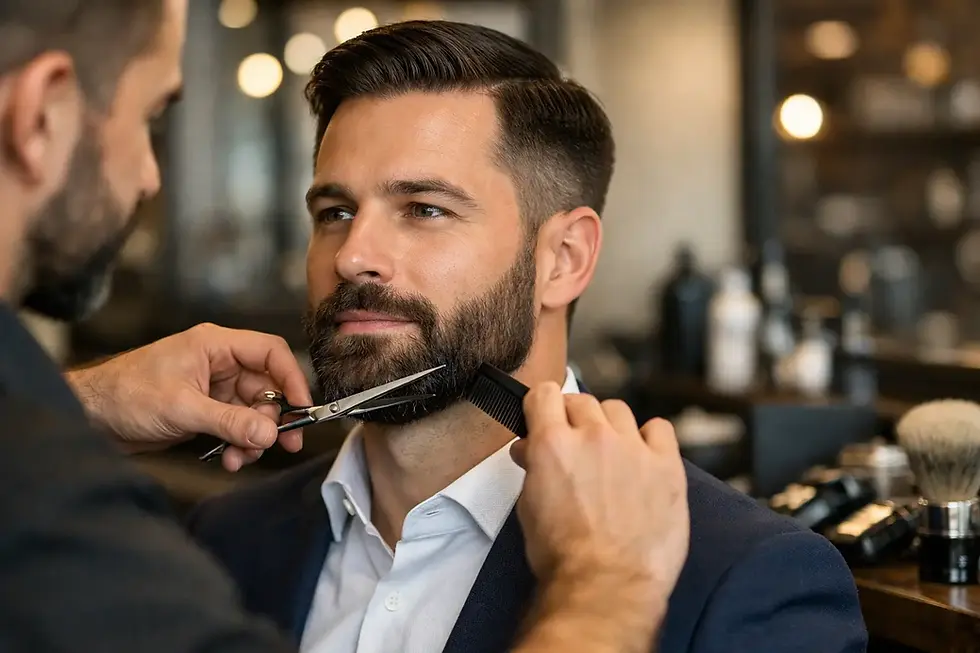
The key is proportion. If you have a strong beard, the haircut and beard should work as one shape rather than compete with each other. Extra height on top combined with a long beard can lengthen the face further. A tighter beard or fuller sides may create a more balanced result. This is why a proper consultation matters. The haircut is not separate from the rest of your grooming.
What to Ask for in the Barber Chair
You do not need barber terminology to get a quality result. Clear, practical language is more useful than trying to name every guard number. Start by explaining what you like and what has not worked in the past. Mention whether you want your hair off your face, whether you wear a hat often, and how much time you normally spend styling it.
A photo can help communicate the direction you have in mind, especially for length and overall shape. Bring one or two images rather than ten different styles. More importantly, be open to adjustments. The person in the photo may have different density, texture, hairline, or facial structure. The goal is not to copy the image exactly. It is to achieve the version of that look that works for you.
Be specific about the outcome you want. You might say that you want the sides neat without exposing too much scalp, that you want texture without a messy finish, or that you need a style that still looks professional as it grows out. Those details give your barber a stronger brief than simply asking for “short on the sides.”
It also helps to speak up early. If the top feels shorter than expected or the fade is moving higher than you pictured, a respectful comment during the service is far easier to address than disappointment after the cut is finished. A professional barber wants the final result to feel right to you.
The Details That Separate a Good Cut From a Reliable One
A reliable haircut holds its shape from every angle. The blend through the sides should look natural, the crown should sit properly, and the neckline should be clean without being pushed too high. The top needs enough internal shape that it falls into place, not just a surface trim that looks good for one day.
This is especially important with fades. A fade is not simply a matter of going from short to long. The placement, graduation, and connection to the top all affect the final look. A low fade can keep a classic, understated profile. A mid fade creates more contrast and definition. A high fade can look bold and crisp, but it leaves less room for error and may not suit every head shape or hairline.
The same thinking applies to scissor work. Longer styles need balance and movement, not random layers or unnecessary thinning. Removing too much weight can make hair look weak, frizzy, or difficult to control. The right technique creates shape while keeping enough substance for your hair to behave well after you leave.
Keep Your Haircut Looking Intentional
A quality cut needs a simple plan at home. Start with clean hair and use the product that suits the finish you want. A matte clay or paste generally works well for natural texture and flexible hold. A cream can offer softer control for medium-length styles. Pomade suits more classic, defined looks, while sea salt spray can add grip before blow-drying.
Use less product than you think. Work it through your hands first, apply it evenly, then add more only where needed. Most styling problems come from applying too much product too quickly or trying to force damp hair into a dry-hair shape.
Regular maintenance protects the work. Tight fades often benefit from a refresh within two to three weeks, while many classic cuts and medium-length styles can go longer depending on the shape and your preferred finish. If your beard is part of your look, maintaining its lines and bulk on a similar schedule keeps the overall result balanced.
For Vancouver men who want a cut that looks considered without feeling overworked, Pintor Barber approaches every appointment with that practical standard in mind: clean execution, proper consultation, and a style built for real life.
Your next haircut does not need to be a major change to make a noticeable difference. Ask for a shape that fits your hair and your routine, then give it the care it deserves. When the cut is right, getting ready feels simpler and showing up sharp becomes the easy part.


Comments