
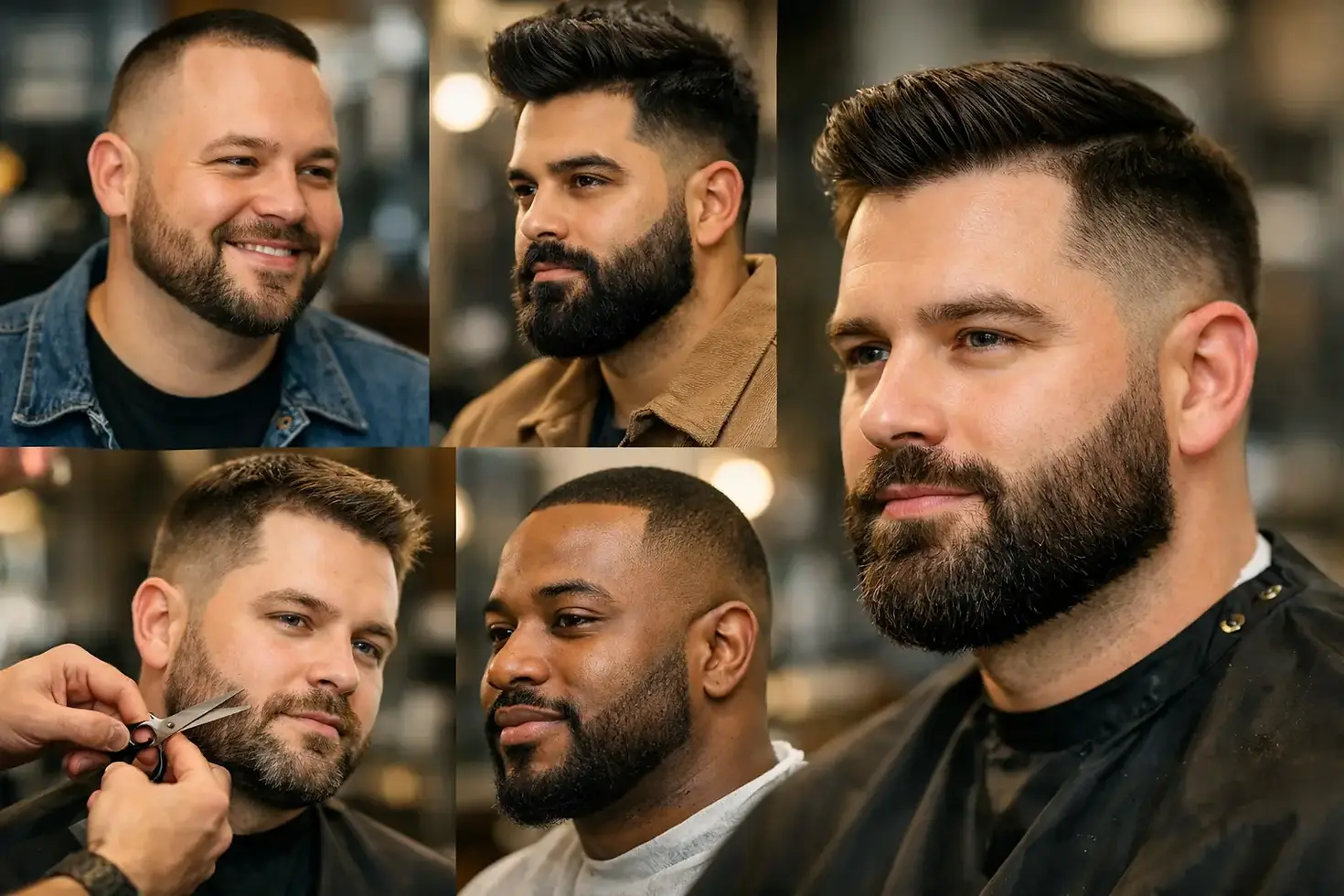
7 Best Beard Styles for Round Faces to Try
A beard should do more than add coverage. It should bring shape, structure, and intention to your overall look. The best beard styles for round faces tend to create length through the chin while keeping the sides controlled, helping the face look more defined rather than wider.
A round face usually has softer angles, fuller cheeks, and a similar width and length. That is not a problem to correct - it is simply useful information for choosing a beard shape. The right design can sharpen the jaw, draw the eye downward, and make everyday grooming feel more considered.
What Makes a Beard Work for a Round Face?
The strongest beard shapes for round faces create a vertical line. In practical terms, that means more length at the chin and less bulk through the cheeks. A clean neckline is equally important. If it sits too low or grows too far down the neck, the beard can lose its structure and make the lower face appear heavier.
Cheek lines should usually remain tidy and slightly conservative. Pushing them too low may make the face look shorter, while letting them grow unevenly can take away from an otherwise sharp cut. Your natural growth pattern still matters. A good beard style works with the density you have, not against it.
Haircut choice also changes the result. A clean taper, textured crop, or style with moderate height on top can complement a beard that is designed to add length. The goal is balance from every angle, not just a strong front-facing photo.
7 Best Beard Styles for Round Faces
1. Short Boxed Beard
The short boxed beard is a reliable choice for men who want definition without committing to significant length. It is trimmed close through the sides and shaped deliberately around the jaw, with a little extra presence at the chin.
For a round face, avoid making the sideburns and cheeks overly wide. Keep the beard compact, square up the lower edges where your growth allows, and let the chin carry slightly more length. This style suits professional settings, low-maintenance routines, and men with even-to-medium beard density.
2. Extended Goatee
An extended goatee connects the moustache and chin beard, often continuing along a narrow section of the jaw. It concentrates visual weight at the centre of the face, which is exactly why it can work so well with rounder features.
The key is restraint. Keep the jaw extensions narrow rather than allowing them to become full, rounded side panels. A well-shaped extended goatee gives the chin a longer, cleaner appearance while leaving the cheeks open. It is also a smart option for men whose cheek growth is lighter than their moustache and chin growth.
3. Balbo Beard
The Balbo separates the moustache from a shaped chin beard, with the cheek area kept clean. It has a precise, tailored feel and gives a barber room to build a more angular outline through the lower face.
This is one of the better choices if you want a beard that looks intentional without being heavy. The centre section can be extended modestly beneath the chin, while the absence of full side coverage prevents added width. It does require regular detail work, especially around the moustache, corners of the mouth, and neckline.
4. Anchor Beard
The anchor beard combines a pointed chin beard with a narrow line along the jaw and a separate moustache. Its shape naturally draws attention downward, creating the appearance of a more tapered face.
It is not the best choice for every growth pattern. Sparse chin growth or patchy jawline coverage can make the outline look incomplete. But if you have solid density through the chin and lower lip, an anchor beard offers a sharp, distinctive finish that works especially well with a polished haircut.
5. Van Dyke
The Van Dyke pairs a disconnected moustache with a pointed goatee. It is a classic style with plenty of character, and its narrow shape keeps the focus in the centre of the face rather than at the cheeks.
This style is particularly useful when you want to create definition but prefer not to grow a full beard. The point should be subtle and suited to your natural chin shape. Going too long or too sharp can feel theatrical; a controlled, neatly trimmed version looks far more modern.
6. Tapered Full Beard
A full beard can suit a round face, but it needs discipline. The sides should be tapered close enough to avoid a circular silhouette, while the beard is left longer from the jaw toward the chin. Think gradual structure rather than a large, uniform block of hair.
This style is ideal for men with dense growth who want a stronger, more mature look. It takes more upkeep than a short boxed beard because the shape can disappear quickly as the cheeks gain bulk. Regular beard trims keep the side profile clean and preserve the length where it matters.
7. Short Beard With a Defined Chin
For men who prefer a restrained beard, a short all-over length with slightly more weight at the chin can make a noticeable difference. The change may only be a few millimetres, but it creates a subtle vertical effect without looking overly sculpted.
This is an excellent everyday option for men who wear a close fade, work in a conservative environment, or simply want their beard to look clean without becoming the main feature. It is also easier to maintain at home between professional appointments, provided the cheek and neck lines are already set correctly.
Styles That Can Add Too Much Width
There are no hard rules in grooming, but some shapes generally work against the goal of adding definition. A wide, uniform full beard can make a round face appear broader, especially when the cheeks are left fluffy and the chin is kept short. Very round beard bottoms can have the same effect.
Heavy sideburns that blend into broad cheek coverage may also put too much visual weight beside the face. If you like a fuller beard, this does not mean you need to shave it down. It means the outline needs a plan: tighter sides, a cleaner neckline, and measured length through the chin.
A barber should also consider your jawline, neck length, hair density, and how quickly your beard grows. Face shape is a starting point, not a fixed set of instructions. A style that looks excellent on one round-faced client may need a different taper or chin length on another.
The Details That Make the Difference
Beard shape is only as good as its edges. The neckline should sit above the lowest part of the neck rather than following it all the way down. A common reference point is roughly one to two fingers above the Adam's apple, then curved gently toward the jaw. The exact placement varies, but it should look natural from the side and clean when you look down.
Use beard oil when the hair feels dry or the skin beneath it becomes uncomfortable. A small amount helps soften coarse growth and reduces the rough finish that can make even a good shape look neglected. For medium or longer beards, a balm can provide more control while a beard brush directs the hair into the intended silhouette.
Do not chase perfect symmetry with a trimmer every day. Small corrections are useful, but over-trimming often creates uneven lines and removes the fullness needed to shape the beard properly. Let the beard grow for two to three weeks if you are changing styles, then have the outline established with enough length to work from.
Get the Shape Built Around You
The best beard is not always the fullest or the most complicated. It is the one that fits your face, grows well in your natural pattern, and still looks sharp on a busy Tuesday morning. A professional beard service can assess where to remove weight, where to preserve length, and how to make the beard work with your haircut.
At Pintor Barber in Kitsilano, that consultation is part of the craft. Bring in the beard you have, not an unrealistic expectation, and build a shape that gives your face more definition and your routine more confidence.


Comments