
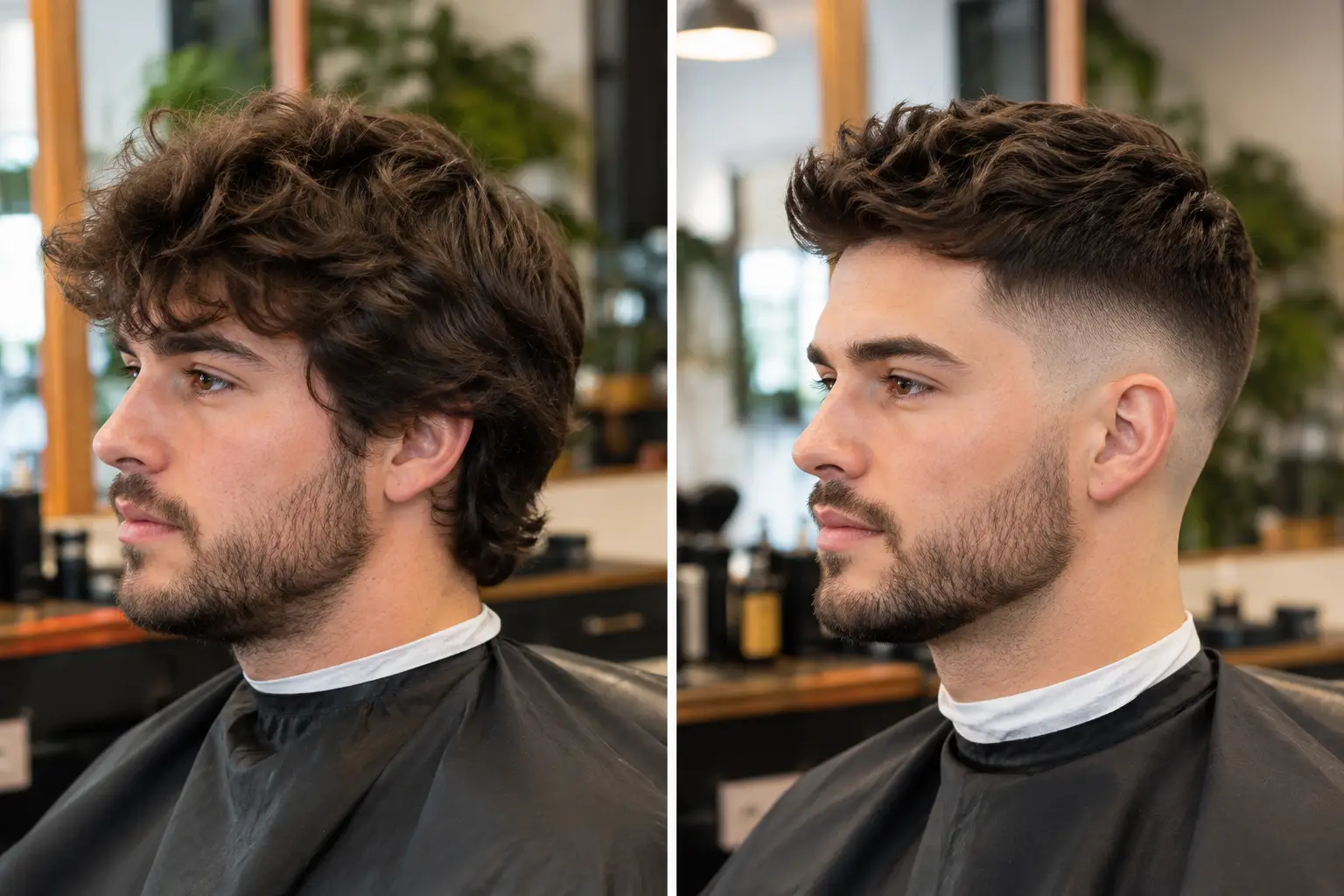
A Professional Fade Transformation Example
A professional fade transformation example is not simply a before-and-after photo with shorter sides. The real change is in the structure: weight is removed where it makes the head look heavy, the blend is placed to suit the client, and the finish looks intentional from every angle. When the fade is done properly, it brings the full haircut into focus.
For men who want a cleaner, more confident look, a fade can make a major difference without forcing a dramatic change on top. It can sharpen a classic side part, give textured hair more definition, or clean up the outline around a beard. The result should feel like a better version of the client’s own style, not a haircut chosen from a trend board.
What a Professional Fade Transformation Really Shows
A strong transformation starts before the clippers come out. Hair density, growth patterns, head shape, current length, face shape, and daily routine all affect where a fade should begin and how high it should travel. Two clients can ask for a low fade and need completely different executions.
Take a common scenario: a client arrives with bulky growth around the temples and above the ears, a disconnected beard, and a top that has lost its shape. Nothing is necessarily wrong with the hair. It has simply grown out past the point where its lines and proportions still work together. The sides push outward, the neckline becomes soft, and the top can appear flatter or heavier than it really is.
The goal is not to take everything down as tight as possible. It is to restore balance. A barber may choose a low taper fade to retain enough weight around the upper sides while cleaning the area around the ears and nape. If the client has a fuller beard, the fade can transition naturally into the beard line so the profile looks considered rather than divided into separate pieces.
This is the difference between a haircut that looks fine in the chair and one that looks right when the client gets home, puts on a jacket, or walks into a meeting.
Professional Fade Transformation Example: From Bulk to Balance
Imagine medium-length hair on top with four to six weeks of growth through the sides. The client likes the length above but feels that the overall shape has become round and untidy. He wants to look sharper for work while keeping enough texture to style casually on weekends.
The consultation identifies the right direction: preserve the top, refine the transition, and keep the fade low enough that it grows out with control. A high skin fade would create more contrast and expose more of the head shape. That can look excellent for the right client, but it is not automatically the best answer. In this case, it may feel too aggressive beside a longer, textured top and require more frequent maintenance.
The transformation begins with sectioning and debulking. Before the fade is blended, excess weight is removed from the side panels in a controlled way. This prevents a dark shelf from sitting above the fade, one of the most common reasons a haircut can look disconnected as it grows out.
Next comes the foundation. The barber establishes the lowest area of the fade around the ear and nape, then works upward through carefully selected clipper lengths. Each section is blended into the next with small, deliberate movements. The aim is not to erase every bit of contrast. A good fade has a clean progression from shorter to longer hair, with no harsh lines, patches, or unexpected dark areas.
The upper transition is where experience becomes visible. Hair often grows in different directions near the parietal ridge, the area where the head begins to curve away from the sides. If too much is removed here, the cut can look hollow or disconnected from the top. If too much is left, the sides can appear bulky again within days. The barber adjusts the blend to the hair’s natural behaviour rather than relying on one fixed clipper formula.
Once the sides are balanced, the top is shaped to support them. Textured hair may need point cutting to remove weight without sacrificing movement. Straighter, denser hair may benefit from a more structured outline. The front is left with enough length to work with the client’s preferred styling direction, whether that means a natural textured finish, a controlled quiff, or a relaxed side sweep.
The final detail work brings the transformation together. The neckline is cleaned without being pushed unnaturally high. The temple area is sharpened in a way that still suits the hairline. If there is facial hair, the beard is blended and outlined to connect with the haircut. When every element is working together, the client looks more polished without looking overdone.
Choosing the Right Fade Height
Fade height changes the entire character of the cut. A low fade keeps more weight around the sides and is often a strong choice for professionals, men with longer tops, or anyone who wants a more gradual grow-out. It offers a clean result while staying understated.
A mid fade sits higher and creates more visible contrast. It can bring definition to rounder face shapes and works well when the client wants a modern, sharper profile without committing to the boldest finish.
A high fade puts the focus on the top of the haircut. It suits clients who prefer a stronger, more athletic look or wear their hair short above. The trade-off is maintenance. Because the shortest area reaches higher on the head, regrowth becomes noticeable sooner.
Skin fades create the cleanest possible base, while a zero or short clipper finish leaves a touch more softness. Neither is objectively better. Sensitive skin, scalp visibility, personal style, and how often someone plans to return all matter. A professional recommendation should account for those details instead of treating every fade as the same service.
Why the Grow-Out Matters
The best fade is not judged only on the day of the appointment. It should still hold its shape as the hair grows. This is why preserving the right amount of weight above the blend matters so much.
A fade that is taken too high or blended too aggressively can look impressive for a few days, then lose its proportion as the top and sides grow at different rates. A well-planned cut has a cleaner path through the next several weeks. For many clients, that means a low or mid fade with a natural transition rather than the shortest possible finish.
Styling also affects how long the transformation feels fresh. A small amount of matte clay or cream can define textured tops without making them stiff. For a cleaner, more classic look, a light styling cream can control direction while keeping the hair touchable. The right product supports the cut instead of masking it.
The Details That Separate a Good Fade From a Great One
A fade can look clean at first glance and still miss the details that create a premium result. The transition should be even on both sides, but it should not be mechanically identical if the client’s head shape or growth patterns differ. Symmetry is the goal, yet thoughtful adjustment is how it is achieved.
The contour around the ears deserves the same attention as the blend. It should look clean without cutting into the hairline or leaving an artificial-looking outline. The nape should suit the client’s natural growth, especially for men whose neck hair grows upward or irregularly.
Then there is the consultation after the cut. A barber should show the client how the style sits naturally, explain what product will help, and give a realistic idea of when the cut will need attention again. This is not an upsell. It is part of making sure the result works beyond the appointment.
At Pintor Barber, that standard of detail matters because a fade is never just about removing hair from the sides. It is about building a sharper shape that fits the person wearing it.
A Fade Should Work in Real Life
The most successful transformation is one that feels easy to wear. It should look composed in an office, clean at dinner, and still natural on a quiet weekend. It should suit the client’s routine, whether he styles his hair every morning or prefers to use little more than water and a quick brush through.
Bring a few reference photos if they help explain the look you want, but be open to a conversation about what will suit your hair now. A photo can show the mood, the finish, or the level of contrast you like. Your own density, hairline, beard, and maintenance preference determine the version that will look strongest on you.
A professional fade transformation is built in the small decisions: where the blend starts, how the weight is carried, how the top connects, and how the cut will grow out. Choose a shape that fits your life, then give it the attention it deserves.


Comments