

Professional Haircuts for Men That Work
A cut can look great for twenty minutes and still be the wrong choice for real life. The test is Monday morning, gym sweat, a bike ride through Kits, a client meeting downtown, and dinner later that night. That’s where professional haircuts for men separate themselves from trendy cuts that only work under barbershop lighting.
A professional haircut is not code for boring. It means the shape is clean, the proportions make sense, and the finish holds up when you style it yourself. It should suit your face, your hair type, and the pace of your week. Most of all, it should make getting ready easier, not more complicated.
What makes a haircut look professional
The word professional gets used loosely, but in barbering it usually comes down to control. Clean edges, balanced weight, and a shape that grows out well all matter more than chasing whatever cut is all over social media this month.
A professional result should look intentional from every angle. The sides should transition cleanly. The neckline should be finished properly. The top should work with your natural growth pattern, not fight it. If your hair stands up in one spot, collapses at the crown, or gets heavy above the ears after ten days, the cut needs to account for that from the start.
This is also where experience shows. A barber can give two clients the same general style and still cut them differently because density, head shape, and texture change the outcome. That difference is usually what separates a decent haircut from one that feels made for you.
Professional haircuts for men are about fit, not just style
The best cut on paper is not always the best cut for your routine. If you wear a suit most days, work in a creative field, spend half your time in a hard hat, or want to keep your mornings under five minutes, those details matter.
A tighter taper with a natural top can look polished without feeling overdone. A low fade can be sharp and versatile, but on some men it grows out faster than they want. A scissor cut might feel more relaxed and mature, but it needs enough structure to avoid looking unfinished by week two.
That is why the consultation matters. Not the forced kind where someone asks one vague question and starts cutting, but a real conversation about how you wear your hair now, what annoys you about it, and how much effort you are realistically going to put into styling it.
The cut has to match your workday
For office settings, men often do best with shape that stays clean without looking severe. Think tapered sides, controlled length on top, and enough texture to keep it modern. If your role is more client-facing, the haircut should read polished without looking stiff.
If your work environment is more casual, you have more room to keep movement and softness through the top. Even then, the haircut still needs structure. Loose does not mean messy. Relaxed can still look deliberate.
Hair type changes everything
Straight hair shows every line, so precision matters. Thick hair needs weight removed in the right places or it can balloon out. Wavy hair often looks best when the barber works with the movement rather than cutting it too short and forcing it flat. Curly hair needs shape and balance first, not random bulk reduction.
This is where cookie-cutter cutting falls apart. A photo can help, but the same photo on different hair types can produce completely different results.
The most reliable styles for a professional look
There is no single best haircut for every man, but a few styles consistently deliver because they balance polish with practicality.
The classic taper is one of the safest strong choices. It keeps the neckline and sides tidy while leaving enough length to part, push back, or wear naturally. It works well for men who want flexibility and a clean finish without the sharper contrast of a skin fade.
A low or mid fade with textured length on top suits men who want a more modern edge. It looks crisp, photographs well, and can be styled neatly or casually. The trade-off is maintenance. Fades usually need more frequent visits if you want them looking tight all the time.
The side part is still a strong option when it is cut with a modern hand. Not helmet hair, not overly shiny, and not frozen into place. Done properly, it gives structure and maturity without looking dated.
A crop can also work well as a professional style, especially for men who want low effort. The key is keeping the fringe and top length balanced so it feels sharp, not blunt or heavy. On the right face shape and hairline, it is practical and clean.
For men wearing their hair longer on top, a scissor cut with tapering around the ears and neckline can look polished if the shape is built properly. This is often a good fit for creatives, students, and professionals who want a less rigid look while still keeping standards high.
How often should you get a professional haircut?
It depends on the cut and on how precise you want it to look day to day. Skin fades and very tight tapers often look best with appointments every two to three weeks. Classic short cuts usually hold for three to four. Medium-length scissor cuts may stretch to five or six weeks if the shape is strong.
There is always a trade-off between maintenance and sharpness. The cleaner and tighter the haircut, the faster it loses that fresh finish. Men who want a lower-maintenance schedule are often better off choosing a cut with softer transitions and a bit more natural movement.
A good barber will be honest about that. There is no point giving someone a high-maintenance style if they only want to come in once a month and spend two minutes styling at home.
What to ask your barber if you want better results
You do not need barber vocabulary to get a great cut, but clarity helps. Instead of saying short on the sides and a bit off the top, explain how you want it to look after two weeks, whether you wear product, how you part it, and what usually goes wrong.
If your crown sticks up, say so. If your sides puff out, mention it. If you never style your hair before work, that matters. These details help shape the cut around your actual habits.
Photos can help, but use them as direction, not a rigid blueprint. The better conversation is about elements - tighter here, more weight there, enough length to push back, cleaner around the ears, softer at the neckline. That gives the barber room to adapt the cut to your hair instead of copying a style that may not suit you.
Why the finish matters as much as the cut
A lot of men judge a haircut only when they leave the chair. A stronger test is whether it still works when you wash it the next morning and style it yourself. If the barber used three products, a blow dryer, and ten minutes of detailing to make it look right, the cut may not actually fit your routine.
Professional haircuts for men should be built to function beyond the appointment. The styling should support the shape, not rescue it. A matte product can add control without stiffness. A light cream can keep texture in place. But the cut should still carry most of the load.
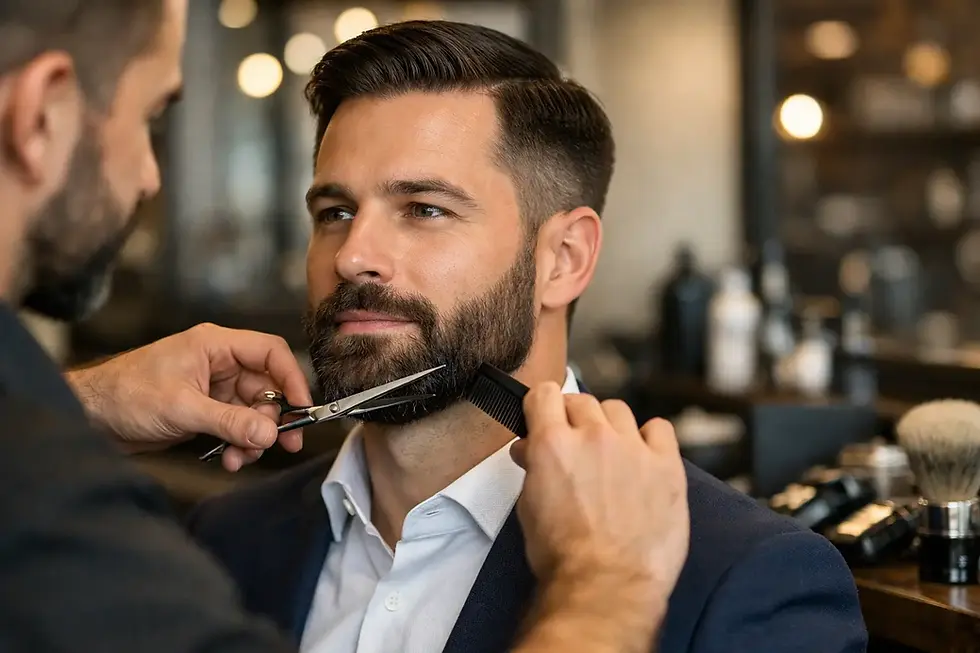
That is one reason dedicated barbershops continue to matter. Men who want consistency usually want more than a quick trim. They want someone who remembers how their hair grows, what they asked for last time, and how to fine-tune the cut as seasons, jobs, or style preferences change. In a neighbourhood shop like Pintor Barber, that relationship is part of the service.
The right haircut should simplify your week
The best professional haircut is the one that makes you look put together without asking for too much in return. It should suit your job, your pace, and the way you actually live, whether that means a sharp fade, a clean taper, or a tailored scissor cut.
If you have been settling for haircuts that look fine for a few days and frustrating after that, the issue may not be your hair. It may just be time for a cut with better structure, better judgement, and a barber who knows the difference. A good haircut does not need to shout. It just needs to keep working when life gets busy.


Comments