
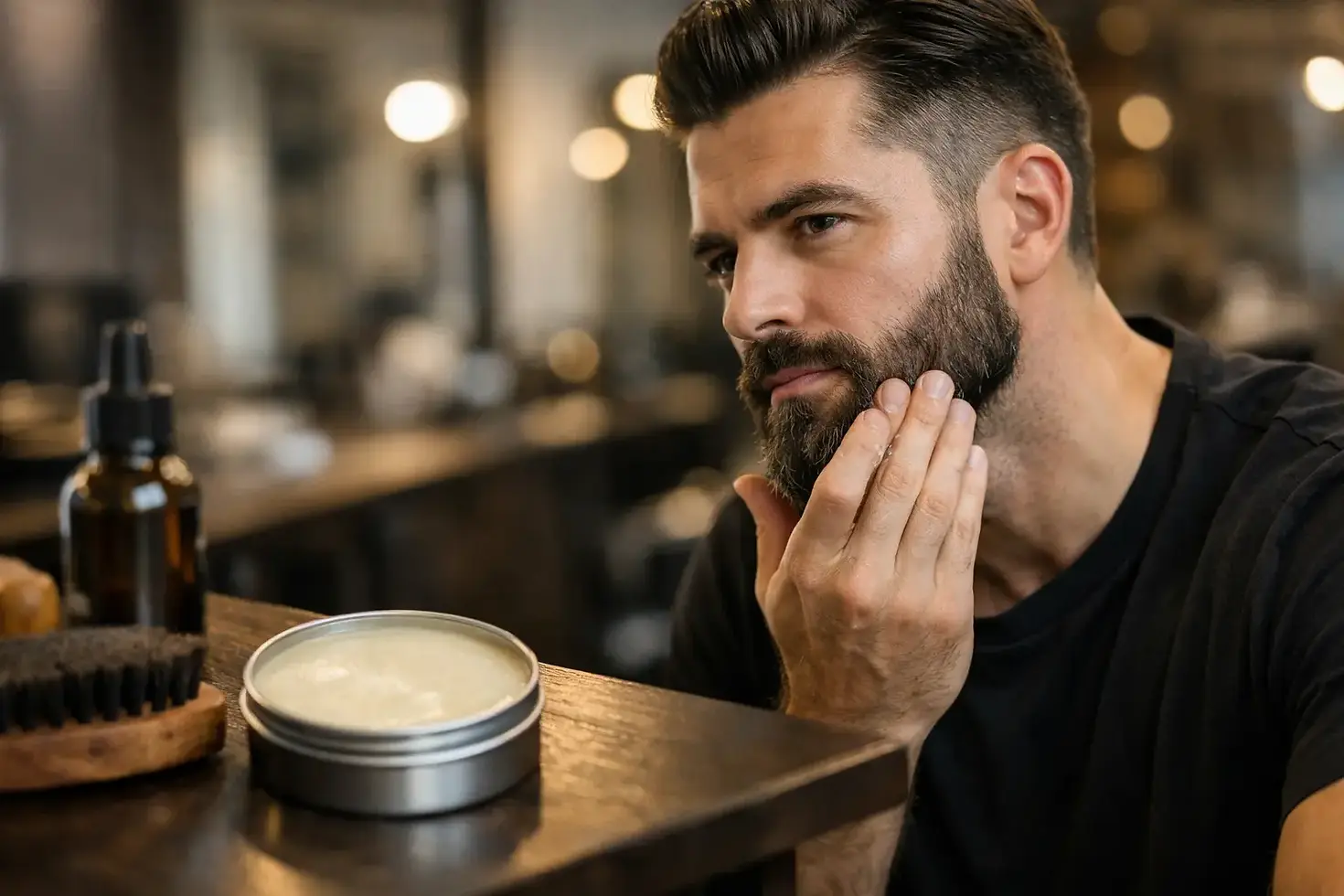
What Does Beard Balm Do for a Better Beard?
A beard can be freshly trimmed and still look unfinished by mid-afternoon. Dry ends start to flare, wiry hairs lose their direction, and the shape your barber set begins to disappear. So, what does beard balm do? It gives facial hair moisture, light control, and a more intentional finish without making your beard look stiff or overworked.
For men with anything beyond close stubble, beard balm is one of the simplest ways to make daily beard care work harder. It is not a replacement for proper shaping, washing, or a professional beard trim. It is the product that helps maintain those results between appointments.
What Does Beard Balm Do for Your Beard?
Beard balm conditions the hair and the skin beneath it while providing a modest level of hold. Most formulas combine nourishing oils and butters with wax. The oils help soften dry facial hair, the butters add moisture and density, and the wax helps keep loose hairs in place.
That combination matters because beard hair behaves differently from the hair on your head. It is often coarser, curlier, and more prone to dryness. As it gets longer, it can pull moisture from the skin below, leaving you with rough texture, irritation, or beard dandruff. A well-made balm helps reduce that dry, untidy feeling while giving the beard a healthier-looking finish.
The result should not look glossy or heavily styled. Used correctly, balm makes a beard feel softer, sit closer to its intended shape, and look more consistent through the day. Think of it as light structure for a beard that has enough length to need direction.
Conditioning Starts at the Skin
The visible beard gets most of the attention, but the skin underneath determines whether it feels comfortable to wear. When skin is dry, beard hair can feel rougher and itchier. Flaking may become more noticeable, particularly in colder Vancouver weather or after frequent hot showers.
Beard balm helps by carrying conditioning ingredients down through the hair and onto the skin. Butters such as shea or cocoa butter are commonly used to soften and seal in moisture. Oils may help the hair feel more flexible rather than brittle. Beeswax or plant wax provides the hold that separates balm from a simple beard oil.
It is not a cure for every skin concern. Persistent redness, severe flaking, or painful irritation deserves attention beyond a grooming product. But for ordinary dryness caused by weather, washing, or coarse hair, balm can make a clear difference in comfort.
There is a trade-off. A very rich balm may feel excellent on a dense, long beard but can be too heavy for a short beard or oily skin. In that case, use less product or choose a lighter formula. More balm does not create a better finish. It usually creates buildup.
Light Hold Keeps the Shape Clean
A beard balm is especially useful when your beard has a strong growth pattern of its own. Hair under the jaw may curl outward, the cheeks may have a few persistent flyaways, and the moustache may separate from the rest of the beard. Balm will not force every hair into submission, but it will make the overall shape look more deliberate.
This is where beard balm differs from beard oil. Oil is primarily for conditioning and softness. It leaves little to no hold, making it a strong choice for short beards, dry skin, or anyone who wants a natural finish without styling. Balm offers similar conditioning with more control, so it tends to suit medium and longer beards better.
Beard wax sits at the other end of the scale. It is designed for stronger hold, often for a structured moustache or a highly sculpted beard. For everyday wear, wax can feel too firm. Balm occupies the useful middle ground: enough hold to keep a beard neat for work, dinner, or a full day out, while still allowing natural movement.
How to Use Beard Balm Properly
Start with a clean, dry or slightly damp beard. If it is dripping wet, the balm will not distribute well and can sit on the surface instead of working through the hair. After a shower, towel-dry first and give the beard a few minutes to settle.
Use a fingernail to take a small amount from the tin. For a short beard, a pea-sized amount is often enough. A fuller beard may need closer to a thumbnail-sized amount, but begin conservatively. Rub the balm thoroughly between your palms until it softens and becomes easy to spread.
Work it into the beard from the skin outward. Start underneath and move up through the hair, then smooth the outer surface in the direction you want the beard to sit. Finish with a beard brush or comb. The brush helps distribute product, aligns the hair, and reveals where the shape needs a little more attention.
Apply balm once a day for most routines. Some men use it after their morning shower; others prefer it before leaving the house. If your beard becomes dry after washing or exposure to cold air, a small second application can help. Keep it light. Your beard should feel conditioned, not coated.
When Beard Balm Is Worth Adding to Your Routine
If your beard is short and even, beard oil may be all you need. Once it reaches a length where hairs begin to bend, separate, or stick out at the sides, balm becomes more useful. It is also a smart option for men whose beards feel coarse after growing past the early stages.
Balm can help when you are growing your beard out, but it cannot replace maintenance. Letting every area grow unchecked often creates bulk in the wrong places and weakens the overall outline. The neckline, cheek line, sideburn transition, and weight around the jaw all affect how full and balanced your beard appears.
A professional trim gives the beard its structure. Balm helps you preserve that structure at home. At Pintor Barber, a proper beard service considers growth direction, density, face shape, and how much daily styling you are willing to do. That makes it easier to choose whether a light balm, an oil, or a stronger styling product suits your routine.
Common Beard Balm Mistakes
The most common mistake is applying balm only to the outside of the beard. That may tame flyaways for an hour, but it does little for the skin and inner layers where dryness often starts. Work it in with your fingertips before smoothing the surface.
Another is applying too much. A heavy hand can leave the beard greasy, sticky, or dull. It can also trap dirt and make washing more difficult. If your beard feels weighed down, use less the next time and spend longer warming the balm between your hands.
Finally, do not use balm to hide an overdue trim. Product can improve texture and control, but it cannot correct an unbalanced outline, split ends, or a neckline that has grown too low. When the beard starts to lose its frame, a skilled clean-up will do more than another layer of product.
Choose the Finish That Fits Your Beard
The best beard balm is not necessarily the one with the strongest scent or the firmest hold. Look for a finish that matches your beard length, skin type, and day-to-day style. A fuller, coarser beard may benefit from a richer balm with more wax. A shorter beard may need only a light application, or may be better served by oil.
If you wear fragrance, consider an unscented or subtly scented balm so products do not compete. If your skin is sensitive, test a small amount first and avoid formulas that leave burning, tightness, or redness. Good grooming should make your routine feel easier, not introduce another problem to solve.
A few seconds of care can change how your beard carries itself. Apply the right amount, brush it into place, and let a clean shape do the talking.


Comments