

Professional Beard Trim Styles That Work
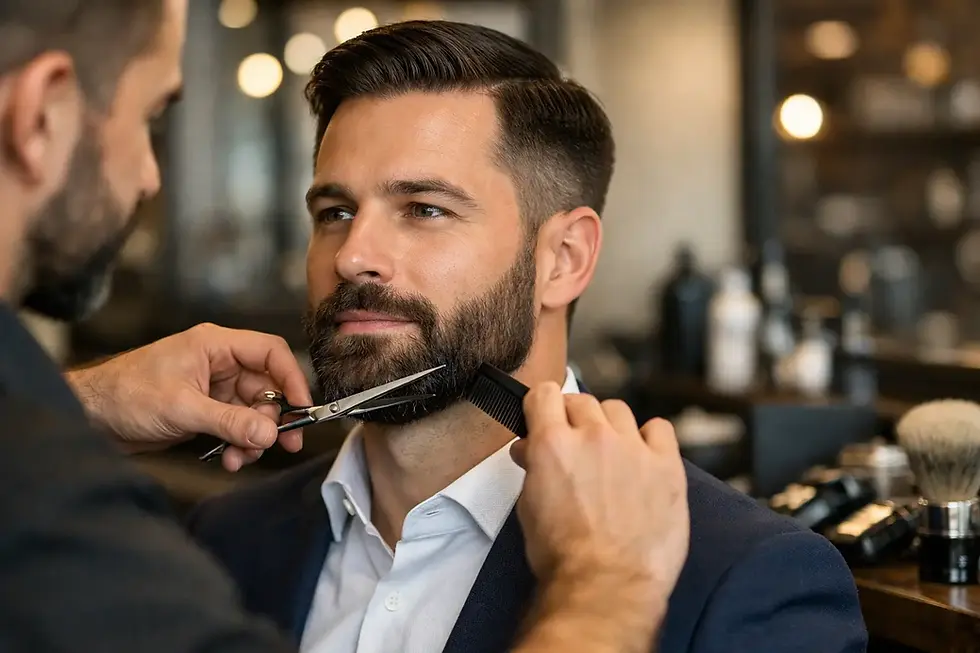
A beard can make a strong first impression, but only when its shape looks intentional. The best professional beard trim styles do not rely on a dramatic outline or a heavy coating of product. They use proportion, clean lines and consistent maintenance to frame your face without distracting from it.
For work, client meetings, weddings or simply showing up well every day, the goal is not to force your beard into a trend. It is to choose a shape that works with your growth pattern, face shape, haircut and the time you are willing to spend maintaining it. A great trim should still look sharp a week later, not only when you leave the chair.
What Makes a Beard Look Professional?
A professional beard is defined less by length than control. The cheek line should follow your natural density without being cut too low. The neckline should be clean and placed correctly, usually above the Adam's apple rather than directly on the jaw. The moustache should be kept off the lip, and the bulk through the sides should suit the width and length of your face.
Symmetry matters, but natural facial features matter more. Most faces are not perfectly even, and a skilled barber balances the beard rather than chasing identical lines on both sides. Over-cutting to create rigid symmetry can make a beard look too thin or artificial as it grows out.
Your haircut also changes what works. A close fade can support a tighter beard with clean sideburn transitions. A longer, textured haircut may suit a fuller beard with softer edges. Beard and hair should look like one considered grooming decision, not two separate appointments.
Professional Beard Trim Styles to Consider
The Short Boxed Beard
The short boxed beard is one of the most dependable choices for professional settings. It keeps the beard close to the face, with defined cheek and neck lines, while leaving enough density to add structure to the jaw. It works particularly well for men with consistent growth through the cheeks and chin.
This style can be adjusted without losing its character. A slightly longer chin can add length to a rounder face, while tighter side panels prevent an already long face from looking narrower. The trade-off is maintenance: because the outline is precise, even a few days of unchecked growth can soften the shape.
The Corporate Stubble Beard
Stubble is not the same as neglect. A corporate stubble beard is deliberately set to an even, short length, often with a lightly defined neckline and a natural-looking cheek line. It is a strong option for men whose facial hair grows unevenly or who prefer a lower-maintenance look that still reads as polished.
The right length depends on density. Dark, coarse growth can look full at a very short setting, while lighter or patchier growth may need a little extra length to appear even. Keeping the moustache neat is essential here. On a short beard, a moustache that hangs over the lip stands out immediately.
The Tapered Medium Beard
A medium beard offers more room for shaping. The sides are gradually blended into the haircut and kept controlled, while the chin can carry slightly more length. This creates a refined profile that feels substantial without becoming heavy.
It is especially useful for men who want to strengthen a softer jawline or add some vertical balance to a round face. However, fuller beards need regular removal of bulk. If the cheeks begin to push outward, the beard can make the face look wider rather than more structured.
The Defined Goatee
A defined goatee focuses growth around the moustache, chin and lower lip, with clean-shaven cheeks. It can be a practical professional choice when cheek growth is sparse but the chin and moustache are strong. The key is scale. A goatee that is too narrow can look disconnected, while one that is too wide can lose definition.
This style is often effective on round or oval faces because it draws the eye downward. It needs careful upkeep around the corners of the mouth and under the chin, where uneven growth becomes obvious quickly.
The Full Beard With Soft Edges
A full beard can look completely professional when the shape is disciplined. Rather than carving high, hard cheek lines, this approach keeps the upper edge close to the natural growth pattern and focuses on balance through the side profile, jaw and neckline. It looks confident without appearing overly styled.
This is a good fit for dense growth and men who prefer more coverage. It does require a grooming routine. Regular combing, beard oil or balm when needed, and periodic reshaping keep the hair lying in the right direction. Full does not mean uncontrolled.
Match the Shape to Your Face, Not Just the Photo
Reference photos are useful, but they should start a consultation, not end one. The same beard style can look entirely different depending on beard density, hair texture, jaw width and face length.
For a round face, a beard usually benefits from less volume at the cheeks and a little more length through the chin. This creates a more vertical outline. For a longer or narrower face, avoid adding too much length below the chin. Keeping modest width through the sides can create better balance.
Square faces already have strong angles, so softer transitions and a rounded finish at the bottom can prevent the beard from looking overly blocky. Oval faces can carry most styles well, though proportion still matters. A very long beard on an already long face can throw off the balance.
Growth pattern deserves equal attention. If one cheek is lighter than the other, dropping the cheek line slightly may make the beard appear more even. If the jawline is dense but the moustache is lighter, a shorter overall style may look stronger than trying to grow maximum length. The best choice works with what grows well.
The Details That Keep a Beard Sharp Between Appointments
Professional results are maintained through small habits, not constant trimming. Wash the beard regularly with a product suited to facial hair, then dry it thoroughly. Damp beard hair often looks fuller and can hide uneven areas, so trimming before it is dry is a common mistake.
Brush or comb a medium-to-long beard downward and outward before applying a small amount of oil or balm. Oil helps soften the hair and condition the skin underneath. Balm provides a little more hold when the beard needs direction. Use either with restraint. Too much product can make even a clean beard look greasy.
At home, keep your maintenance conservative. You can carefully remove obvious hairs below the established neckline and keep the moustache off your lip, but avoid reshaping the major lines every few days. One careless pass can move a cheek line too low or create an uneven neckline that takes weeks to grow back.
If you wear a beard with a fade, pay particular attention to the sideburn transition. This area grows out faster than most men expect, and it has a major effect on whether the haircut and beard still look connected. A professional touch-up schedule depends on your growth rate and style, but clean-edged short beards generally need attention more often than fuller, softer shapes.
Ask for the Right Beard Trim
A useful barber consultation is specific. Mention how you wear your hair, whether you need a conservative finish for work, how much length you want to keep and how often you realistically want to maintain the beard. If you have a concern such as a patchy cheek, a double chin or a moustache that curls into your lip, say so. Those details guide the shape.
At Pintor Barber, the strongest beard work begins with that conversation. A trim should account for your face in motion, your profile, your hairline and the way your beard grows back, not only how it looks under the shop lights.
Bring a reference if it helps, but stay open to adjustment. The right professional style is the one that gives you a cleaner outline, suits your features and remains easy to wear when your week gets busy. Choose a shape with enough structure to look deliberate and enough practicality to keep it that way.


Comments